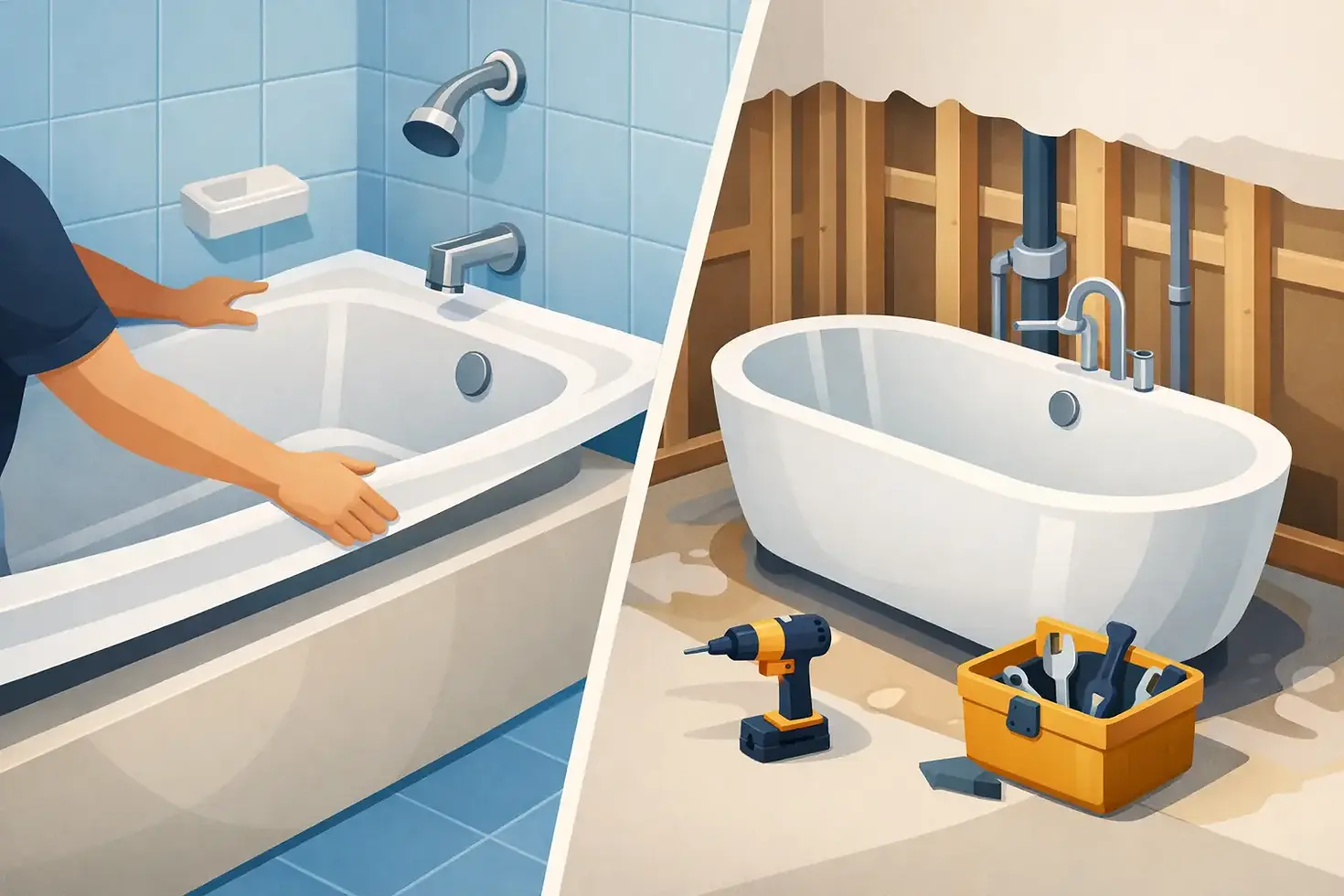
Bathtub Insert Versus Replacement Compared
- Sameer Kavah
- Jul 14
- 6 min read

A high bathtub wall can turn an ordinary daily routine into a real fall-risk concern. When families compare bathtub insert versus replacement, they are usually looking for the same outcome: safer access to bathing without creating weeks of disruption, a major renovation bill, or unnecessary stress for an older parent.
For many Ontario homeowners, a bathtub cut-out conversion offers a practical middle ground. It adapts the tub already in place by lowering the step-over height, making it easier to enter and exit. A full replacement can still be the right choice in some bathrooms, but it is not the only path to a safer home.
What Does a Bathtub Insert Mean?
The term bathtub insert can mean different things, so it is worth being clear. In accessibility work, it commonly refers to a custom waterproof insert installed after a section of the tub wall has been professionally removed. The finished opening creates a low step-in area, allowing someone to enter the bath with far less lifting, balancing, and twisting.
The insert is fitted to the existing tub and sealed to manage water properly. Depending on the user’s needs, the opening can be narrow, wide, extra-deep, or fitted with a door-cap option. The goal is not to make the bathroom look like a construction site. It is to create a clean, durable bathing entry while preserving as much of the existing bathroom as possible.
This approach is especially helpful for people who can still stand and shower but struggle with the high side of a conventional tub. It can also be paired with professionally positioned grab bars, a handheld shower, and a bath seat to create a safer routine without removing the bathtub altogether.
Bathtub Insert Versus Replacement: The Main Difference
A bathtub insert conversion modifies the existing tub. A bathtub replacement removes it and installs a new tub, walk-in tub, or shower base in its place. That difference affects the project timeline, cost, mess, and the number of decisions a homeowner needs to make.
With a full replacement, the contractor may need to remove surrounding wall material or tile, disconnect plumbing, take out the old tub, repair framing, install the new fixture, and restore the walls and finishes. Even when the work is well planned, there can be hidden conditions behind the walls that add time and expense.
A cut-out conversion is more focused. The tub stays where it is, the plumbing usually remains in place, and the existing tile and wall finishes are often left undisturbed. For a household that needs a safety improvement quickly, that reduced scope can make a meaningful difference.
Timeline and disruption
A full bathroom renovation or tub replacement can take several days or longer, depending on materials, plumbing changes, tile work, and scheduling. During that time, the bathroom may be unavailable or difficult to use.
A professional bathtub cut-out can often be completed in as little as one day. That matters when a senior has recently had a fall, has returned home from hospital, or is beginning to avoid bathing because getting into the tub no longer feels safe. A faster project can reduce the period when the household is relying on temporary workarounds.
Cost considerations
Replacing a bathtub is rarely just the cost of a new tub. Demolition, disposal, plumbing adjustments, wall repairs, waterproofing, tile, fixtures, and labour can all be part of the final price. A walk-in tub can provide excellent features, but it is also a significant investment and may require electrical work or changes to the bathroom layout.
A bathtub insert conversion is generally more affordable because it avoids much of that demolition and rebuilding. The final quote still depends on the tub type, the selected opening, the condition of the bathing area, and whether additional safety equipment is needed. However, for homeowners who want safer access without rebuilding the room, the cost difference can be substantial.
When a Tub Cut-Out Is Often the Better Choice
A bathtub cut-out is often a strong fit when the existing bathtub is structurally sound and the main obstacle is the high wall. It can be a sensible solution for homeowners who want to age in place, adult children helping a parent remain independent, and caregivers looking to reduce the risk of slips during bathing.
It is also a practical choice when the bathroom’s tile, vanity, flooring, and plumbing are in good condition. There is little value in tearing apart a functional bathroom simply to solve one access problem. By adapting the entry point, the home can gain a safer bathing setup while keeping the appearance and layout the family already knows.
For many people, familiarity is part of safety. A new walk-in tub may introduce unfamiliar controls, a different seating position, and a longer bathing process. A cut-out conversion allows the person to continue using their usual showering routine with a safer way in and out.
Safe Bath Solutions focuses on this kind of targeted accessibility upgrade for homeowners across Toronto, the GTA, and surrounding Ontario communities. The work is designed around practical results: a lower entry, a clean installation, and minimal interruption to daily life.
When Full Replacement May Be Worth It
There are situations where replacement deserves serious consideration. If the existing tub has extensive damage, persistent leaks, rust, soft flooring nearby, or significant water damage behind the walls, modifying it may not address the underlying problem. A bathroom with failing finishes or outdated plumbing may be better served by a larger renovation.
Replacement can also make sense when a person needs features that a cut-out cannot provide. For example, someone who cannot stand safely while bathing may benefit from a purpose-built walk-in tub with an integrated seat. Others may need a curbless shower with room for mobility equipment or caregiver assistance.
The right answer depends on present needs and likely future needs. A homeowner with mild mobility limitations may need a low step-in opening and grab bars now. Someone with more advanced balance, strength, or transfer challenges may require a more comprehensive bathing solution. An honest assessment should look beyond the fixture itself and consider how the person moves, bathes, and receives help at home.
Safety Depends on More Than the Entry Height
Lowering the tub wall is an important improvement, but the safest bathing area considers the full movement from bathroom door to towel rack. Wet floors, poor lighting, loose bath mats, awkwardly placed controls, and a lack of stable handholds can all increase risk.
Grab bars should be professionally installed into secure backing or suitable wall structure, not attached with temporary suction cups. Their placement should match the user’s movement: one location may help with stepping in, while another may support sitting, standing, or turning. A non-slip bathing surface, reachable shower controls, and a handheld shower can further reduce strain.
It is also wise to think about emergency access. A door-cap option may be useful where preserving a higher water barrier is necessary, but every design choice should be based on the user’s ability to step, balance, and respond if they feel unsteady. The best solution is the one that feels manageable every day, not just on installation day.
Questions to Ask Before Deciding
Before choosing a bathtub insert or full replacement, start with the reason for the change. Is the concern a recent fall, increasing difficulty stepping over the tub wall, a planned recovery from surgery, or a longer-term aging-in-place plan? The urgency and the person’s mobility level will help shape the best option.
Ask whether the existing tub and surrounding walls are in good condition, whether the bathroom must stay usable during the project, and whether the user can safely stand for a shower. It also helps to consider whether a caregiver needs space to assist. These questions bring the decision back to daily life rather than focusing only on the appearance of the bathroom.
A detailed in-home assessment can identify the tub type, measure the available space, review access needs, and recommend an opening style that suits the household. It should also provide a clear explanation of what will be completed, how long it will take, and what safety improvements may be helpful alongside the conversion.
Choosing between a bathtub insert and replacement does not have to mean choosing between safety and affordability. When the existing bathroom is in good shape, a professionally installed tub cut-out can provide a faster, lower-disruption way to make bathing feel safer and more independent - often exactly when a family needs that reassurance most.


Comments