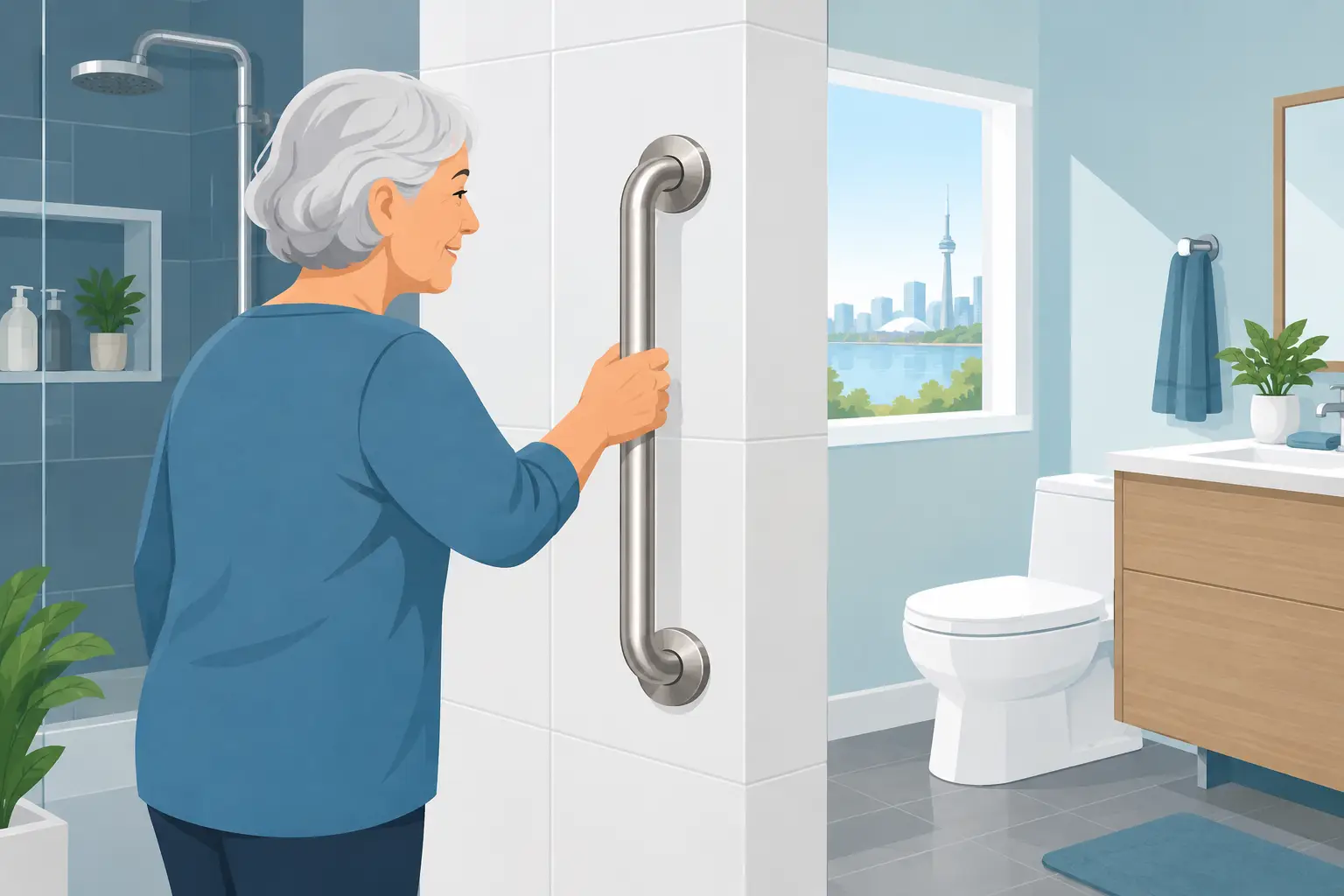
Ontario Grab Bar Installation for Safer Bathrooms

A bathtub wall can feel much higher when balance, strength, or joint pain changes. Ontario grab bar installation gives you or a loved one a secure point of support at the moments when falls are most likely: stepping into the tub, lowering onto a toilet, standing from a bath seat, or turning on a wet floor.
A properly selected and professionally mounted grab bar is a practical home safety upgrade. It does not make a bathroom feel clinical, and it does not require a full renovation. For many Ontario households, it is one of the fastest ways to make daily routines safer while supporting the choice to age in place.
Why Grab Bars Matter in Ontario Bathrooms
Bathrooms combine smooth surfaces, water, tight turning space, and frequent transitions from sitting to standing. Even people who move confidently through the rest of the house can feel unsteady in this environment. A towel rack, vanity edge, or shower door is not designed to take a person's weight. Reaching for one during a slip can create a second hazard.
Grab bars are built to provide controlled support. They give users a stable place to hold while transferring in and out of the tub, moving around the shower, or using the toilet. This can reduce the strain placed on knees, hips, wrists, and shoulders, particularly after surgery or during periods of reduced mobility.
For adult children helping a parent plan ahead, grab bars also offer peace of mind. The goal is not to take away independence. The right installation can help preserve it by making familiar routines feel manageable for longer.
Ontario Grab Bar Installation Starts With the Right Location
The most useful grab bar is not necessarily the longest one or the one placed wherever wall space happens to be open. Placement should reflect how the person actually moves through the bathroom, which hand they naturally use for support, and where they feel least stable.
At the bathtub or shower entrance
A vertical or angled bar near the entry can provide a secure handhold when stepping over the tub wall. This is especially helpful where a person needs support while lifting one leg in or out. A horizontal bar along the back or side wall can then help with balance while standing in the bathing area.
If stepping over the tub wall has become difficult, grab bars can improve safety but may not completely solve the problem. In that situation, a bathtub cut-out conversion can lower the step-in height without the cost and disruption of replacing the entire tub. The combination of easier entry and well-positioned grab bars often creates a much more comfortable bathing setup.
Beside the toilet
Standing up from a toilet can be challenging for people with arthritis, reduced leg strength, or recovery-related mobility limits. A bar placed beside the toilet can provide leverage and stability. Depending on the room layout, a straight wall-mounted bar may work well, while a fold-down support rail may be considered where wall configuration and available space allow.
Clearance matters. A bar should be reachable without forcing the user to twist, lean too far, or navigate around a vanity. The best arrangement depends on the individual bathroom and the user's needs.
Near a bath seat or transfer bench
People who sit while showering often need support when lowering themselves onto the seat and standing again. A grab bar located at the transfer point can make these movements more controlled. It should be positioned for the direction of travel, not simply centred on the wall for appearance.
A Grab Bar Must Be Mounted for Real Support
A grab bar is only as safe as the wall attachment behind it. This is why suction-cup handles and temporary bathroom accessories should never be treated as a replacement for professionally installed grab bars. They may be useful for very limited light balance assistance, but they can release unexpectedly and are not intended to bear a person's full weight.
Professional installation begins by assessing the wall construction and locating appropriate structural support. In many homes, securing into studs is the preferred approach. When studs are not available at the needed location, an experienced installer can determine whether approved anchoring methods or additional reinforcement are appropriate for the wall and the intended use.
Tile walls require particular care. Drilling incorrectly can crack tile, damage waterproofing, or leave an opening that allows moisture behind the wall. A clean installation protects both the user and the bathroom itself. Fasteners, mounting flanges, and sealed penetrations should be selected and completed with the wall material in mind.
This is not a place to guess based on a stud finder alone. A bar may look solid at first but become unsafe if it is mounted into weak backing, drywall only, or an unsuitable anchor.
Choosing a Grab Bar That Fits the User and the Space
Grab bars come in different lengths, finishes, diameters, and shapes. Stainless steel remains a popular choice because it is durable and easy to clean, but there are also options designed to blend with modern or traditional bathroom fixtures. A safety upgrade does not need to look out of place.
The right diameter matters too. A person with limited hand strength or arthritis may find some bars easier to hold than others. Textured or peened finishes can offer additional grip, although a smooth finish may be easier to clean. There is a practical balance between comfort, maintenance, and appearance.
Horizontal bars provide stable support for standing and moving along a wall. Vertical bars can assist with entry and exit movements. Angled bars can be useful when a user needs support in more than one direction. There is no single configuration that works for every bathroom, which is why a short in-home assessment can prevent a poorly placed installation.
When One Grab Bar Is Not Enough
A single bar at the tub may be a meaningful improvement, but it is worth considering the entire route through the bathroom. Can the person safely enter the room, close the door, reach the toilet, turn around, and exit after bathing? A small room may need carefully chosen support points rather than several bars crowded onto every available wall.
Other changes may also be worth considering when fall risk is increasing. These can include a non-slip bathing surface, a shower chair, better lighting, a handheld showerhead, or a raised toilet seat. Each item addresses a different challenge. A grab bar offers support, but it does not reduce the height of a tub wall or create more floor space.
For families dealing with urgent mobility changes, prioritizing the highest-risk movement is often the right first step. If getting into the bathtub is the concern, start there. If standing from the toilet is causing strain, focus on that transfer first. Improvements can be completed in stages as needs and budget allow.
What to Expect From a Professional Installation
A qualified accessibility installer should ask practical questions before recommending placement. Which movements feel difficult? Has the user fallen or nearly fallen? Do they use a cane, walker, or bath seat? Is the concern temporary recovery, or is the home being prepared for long-term aging in place?
The installer should also inspect the bathroom layout, wall surfaces, fixture locations, and available mounting support. From there, they can recommend a setup that is secure, reachable, and suited to everyday use. The work is typically far less disruptive than a bathroom renovation, with no need to remove a tub or replace all surrounding tile for a straightforward grab bar installation.
At Safe Bath Solutions, the focus is on practical bathing safety improvements that fit the home you already have. For many Ontario homeowners, professionally installed grab bars can be completed quickly and paired with a tub cut-out solution when a high tub wall remains the larger obstacle.
A safer bathroom does not have to begin with a major renovation. It can begin with one well-placed, securely mounted grab bar that makes the next step feel steadier.


Comments