When Is Bathtub Entry Unsafe for Older Adults?
- Sameer Kavah
- Jul 25
- 5 min read

A bathtub can become a daily hazard long before someone has a serious fall. The question, when is bathtub entry unsafe, usually comes up after a parent starts gripping the towel bar, hesitating at the tub edge, or asking someone to stay nearby while they bathe. Those are not small changes. They are signs that the existing bathroom may no longer support safe, independent living.
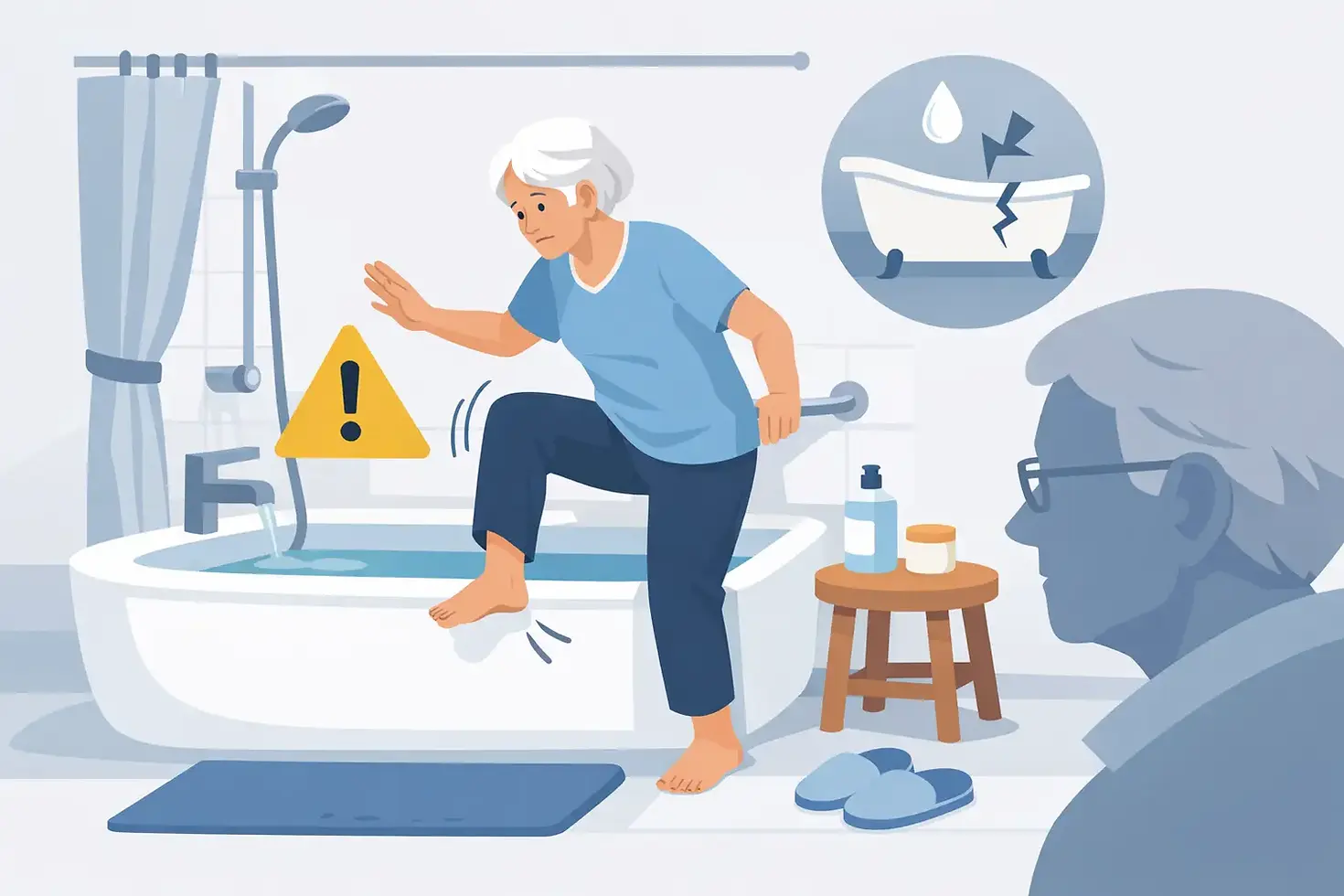
For many Ontario homeowners, the issue is not bathing itself. It is the high tub wall. Stepping over it requires balance, hip flexibility, leg strength, and a dry, stable surface - all at a moment when the floor can be wet and the person may be undressed, tired, or managing pain. Recognizing the risk early gives families more time to choose a practical solution instead of reacting after an injury.
When Is Bathtub Entry Unsafe?
Bathtub entry is unsafe when a person cannot step in and out with consistent control, without relying on unsafe supports or another person’s physical assistance. One difficult day does not always mean the tub must be changed immediately. Arthritis flare-ups, a recent illness, or recovery from surgery can temporarily affect mobility. But repeated difficulty is a clear reason to assess the setup.
The concern becomes more urgent when someone catches a foot on the tub wall, wobbles while lifting one leg over, or needs to lower themselves quickly onto the tub floor because they do not feel steady. A person may also start avoiding baths and showers altogether. Skipping personal care because the tub feels intimidating is a safety and quality-of-life concern, not simply a matter of preference.
A safe entry should feel controlled at every stage: approaching the tub, stepping over the wall, turning, sitting or standing to wash, and exiting onto the bathroom floor. If any part of that sequence involves fear, pain, rushing, or a precarious reach for support, the bathroom needs attention.
Warning signs families should not dismiss
Some warning signs are obvious, such as a slip or fall. Others are quieter and often appear first. Watch for a family member who starts asking for help with bathing, takes much longer to get in or out, or avoids using the bathroom when they are alone.
Pay attention if they use a towel rack, shower door, vanity, or faucet for balance. These fixtures are not designed to hold a person’s body weight and can pull loose without warning. A proper grab bar is very different: it must be installed securely in the right location and selected for its intended load.
Pain matters too. Knee, hip, back, or shoulder pain can make the high step into a standard bathtub unsafe even when the person appears generally mobile. Reduced sensation in the feet, dizziness, poor vision, medication side effects, Parkinson’s disease, stroke recovery, and neuropathy can all increase the risk. So can urgency. Someone who needs to use the bathroom quickly may take chances they would not take under calmer circumstances.
Why a Standard Tub Wall Creates So Much Risk
Most conventional bathtubs were not designed with aging in place in mind. Their outer wall is commonly around 14 to 16 inches high. Clearing that height means standing on one leg while lifting the other over an obstacle, then transferring weight onto a wet tub surface.
That movement is challenging even with a bath mat and a grab bar. A non-slip surface can improve footing, but it does not lower the step. A shower chair can reduce standing time, but a person still needs to get over the tub wall to reach it. These additions can be useful parts of a safer bathroom, yet they do not always solve the central access problem.
This is why families often find that a bathroom can look perfectly functional while becoming increasingly unsafe for the person using it. The risk is built into the entry itself.
A Practical Way to Assess the Bathroom
Start by observing the usual routine, respectfully and without making the person feel watched or judged. Is there enough room to turn and sit? Can they reach towels and toiletries without bending or twisting? Does the floor remain dry near the tub? Are there secure supports exactly where they need them?
Then focus on the tub entry. Ask whether they can lift each foot over the wall without catching it, hold their balance while turning, and step back out after bathing when muscles may be tired. If the answer is “only on a good day,” the setup is not reliably safe.
It is also wise to consider what happens if mobility changes further. Home accessibility improvements are often easier to plan before an urgent medical event, a fall, or a hospital discharge. A solution that works for today should also give the household a reasonable margin of safety for tomorrow.
Safer Options Without a Full Bathroom Renovation
The right upgrade depends on the person’s mobility, bathroom layout, and budget. For some homeowners, professionally installed grab bars, a handheld shower, improved lighting, and non-slip flooring may make the existing arrangement more manageable. These changes work best when the person can still step over the tub wall safely and consistently.
When the height of the tub wall is the main obstacle, a bathtub cut-out conversion can be a more direct answer. The process removes a section of the existing tub wall and installs a finished insert, creating a much lower step-in opening. It can turn a difficult climb into a more manageable entry without removing the entire bathtub or tearing out surrounding tile.
Different insert sizes suit different needs. A narrow opening may be appropriate where basic step-over clearance is the concern. A wider or extra-deep cut-out can provide more room for someone using a bath chair or needing a steadier transfer. Door-cap options may suit households that want flexibility around water containment and bathing preferences. A qualified installer can assess the tub, the surrounding walls, and how the person actually moves in the space before recommending an option.
The trade-off is worth understanding. A cut-out conversion improves access, but it does not replace every safety measure. Grab bars, a stable bathing seat where appropriate, good lighting, and safe flooring may still be necessary. Someone with very limited mobility may need a more comprehensive accessible bathing plan. The goal is not to sell a one-size-fits-all product. It is to make each transfer safer and more realistic for the person using the bathroom.
Why Fast Installation Can Matter
Families often delay accessibility work because they picture a lengthy, disruptive renovation. In many cases, a bathtub cut-out conversion avoids that level of construction. Safe Bath Solutions can complete many conversions in as little as one day, helping homeowners address a clear access concern without a full bathroom demolition or tile replacement.
That speed can be especially helpful after a change in mobility, when an adult child is preparing a parent’s home for safer aging in place, or when a caregiver is worried about leaving someone alone during bathing. Fast should not mean rushed, however. The installation should be measured carefully, finished cleanly, and matched to the user’s needs.
What to Do After a Near Fall
A near fall is a warning, not bad luck. If someone has slipped, caught their foot, or needed help getting out of the tub, make immediate changes while considering a longer-term fix. Remove loose bath mats, keep the floor clear, improve lighting, and stop using towel bars or other unstable fixtures as handholds.
If there is pain, new weakness, dizziness, or a fall with a possible injury, seek appropriate medical advice. Bathroom modifications can reduce environmental risks, but they do not diagnose the health issue that may have contributed to the incident.
For ongoing difficulty, arrange a professional assessment of the bathing area. A clear plan can replace daily worry with an upgrade that supports privacy, comfort, and independence. The safest time to make the change is often before the next step over the tub wall feels like a gamble.


Comments